
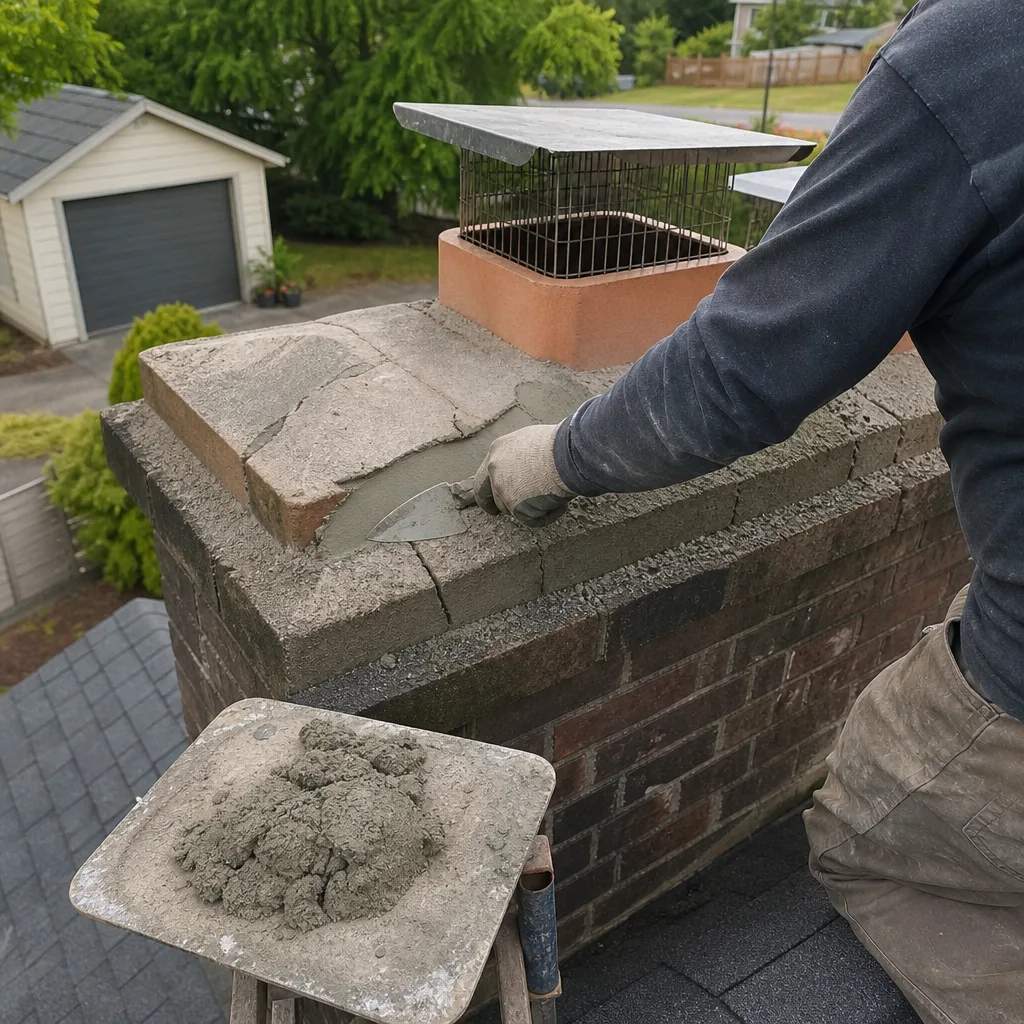
Last updated November 16, 2026
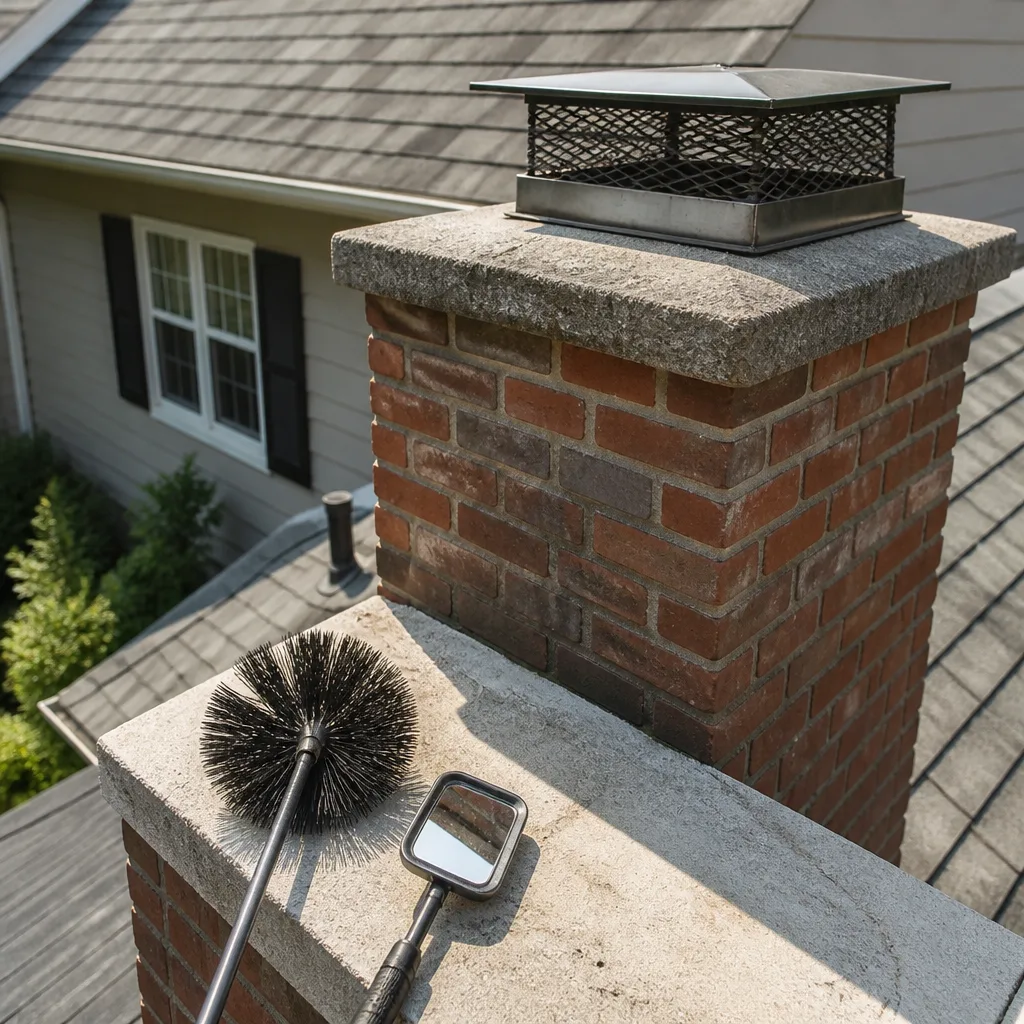 Sweep & inspection
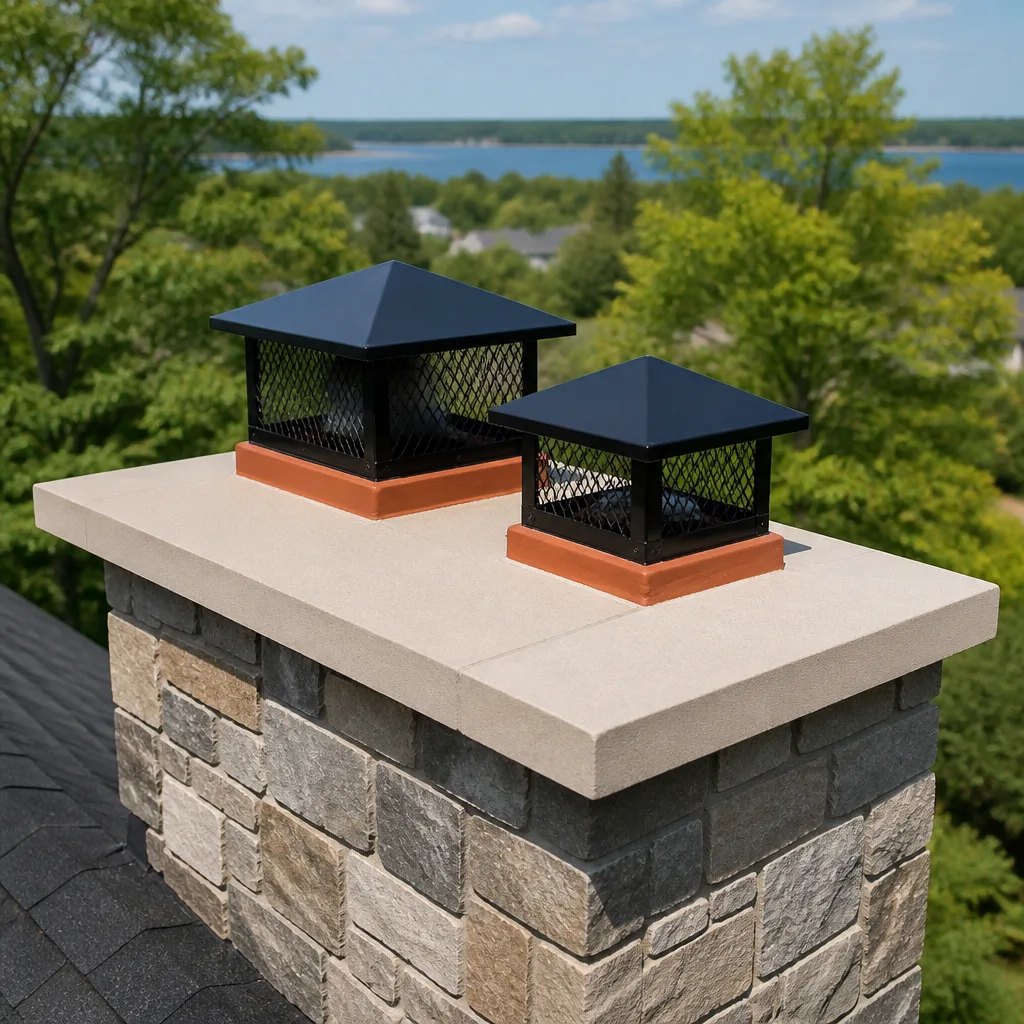 Caps & crowns
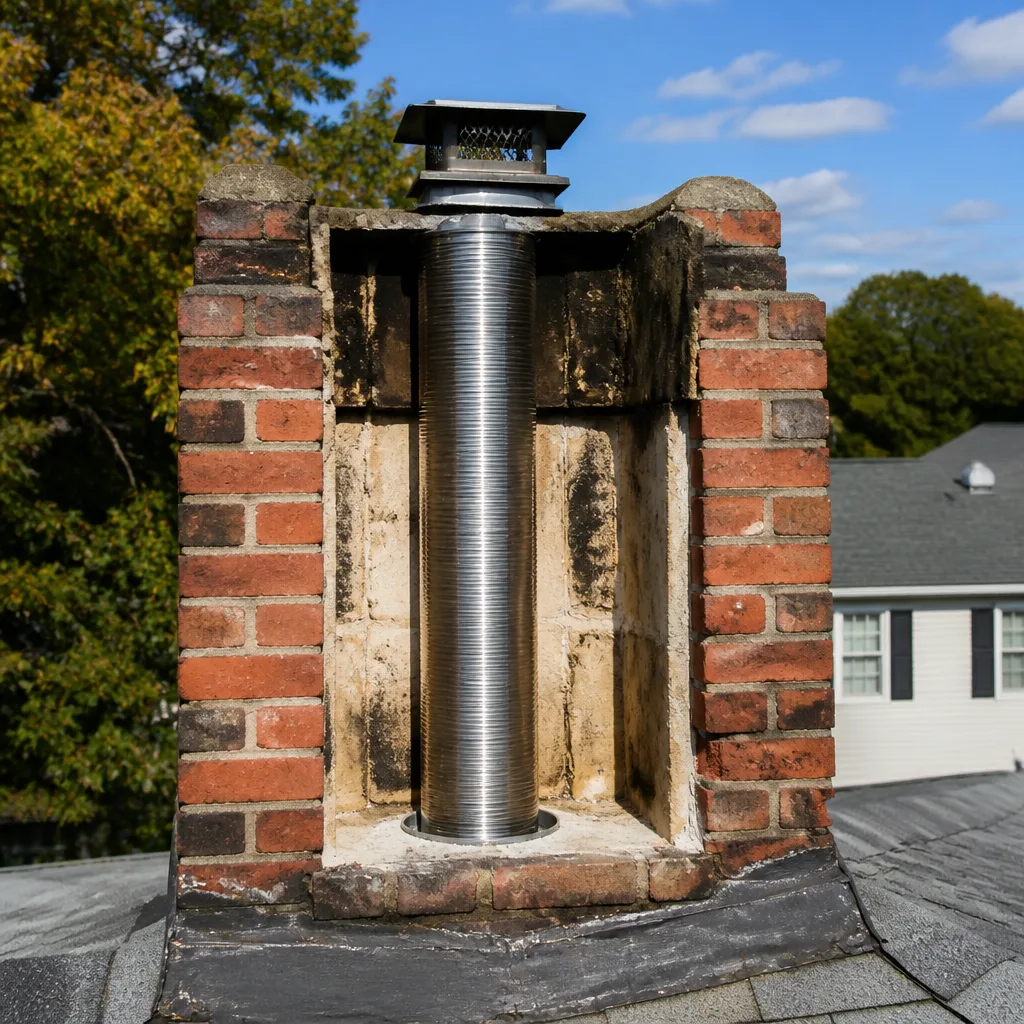 Flue relining
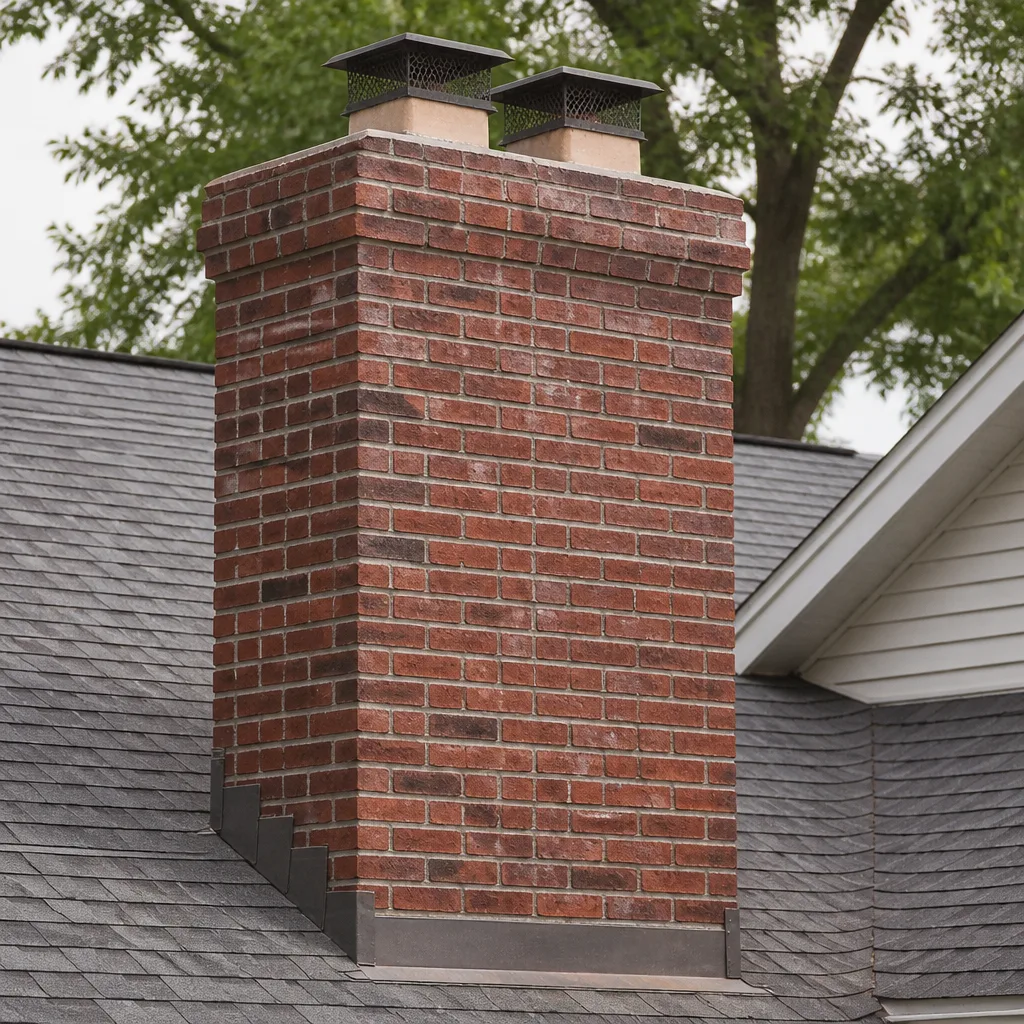 Masonry repair
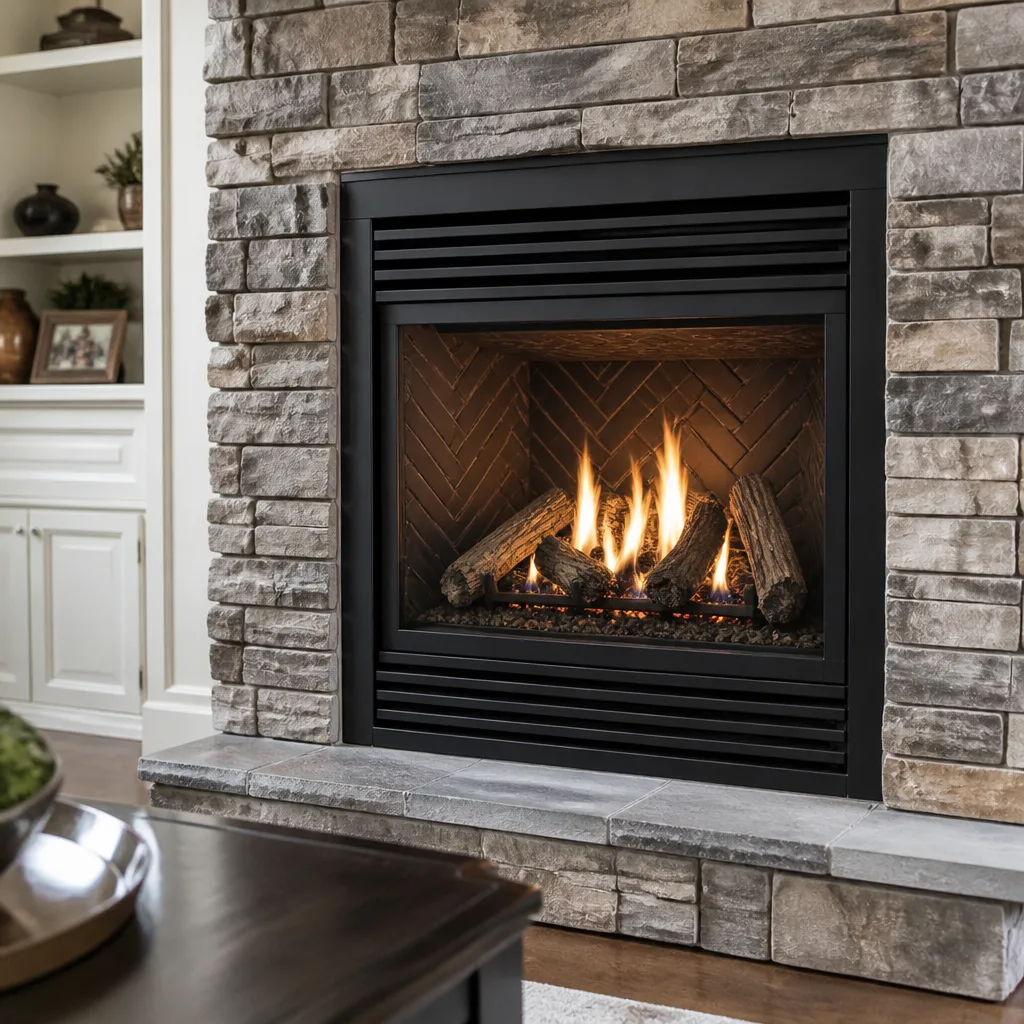 Gas fireplace service
Level 1 sweep and inspection to the NFPA 211 annual standard - flue, crown, cap, and flashing checked and photographed
Chimney sweep logs do not sweep chimneys. They loosen some creosote - which then falls where a brush and vacuum still have to collect it.
The Complete Guide to Chimney Cleaning in Renton
Most chimney fires we see don’t happen in the coldest places. They happen in mild climates like Renton’s, where a fireplace gets used a dozen times a winter, then sits untouched from February to October. Creosote glazes over through the damp spring, dries and cracks in summer, and the first big fire of fall lights it up. Cleaning isn’t a yearly box to tick here; it’s a system of linked tasks that only make sense once you understand what Renton’s moisture, wood choices, and burn habits do to a flue. This guide maps that system, section by section, so you can stop guessing and start maintaining.
Quick Answer
Chimney cleaning in Renton means more than brushing soot out of a firebox. It’s a sweep plus a visual inspection of the flue, damper, cap, and connector, done at a frequency that matches how much you actually burn. For most Renton homes that’s once a year, but heavy burners and anyone with a glazed flue may need it twice.
Styles & brands we work with
- Sweep & inspection
- Caps & crowns
- Flue relining
- Masonry repair
- Gas fireplace service
Table of Contents
- Why Renton’s Climate Changes the Cleaning Schedule
- Cleaning vs. Full-System Inspection: What’s the Difference?
- Douglas Fir, Alder, and What They Leave Behind
- The Three Stages of Creosote and Why Stage 2 Matters Here
- How Often Should You Clean? A Frequency Table by Burn Hours
- What a Certified Sweep Checks That a Generalist Misses
- What You Can Check Yourself (and Where to Stop)
- What Chimney Cleaning Costs in Renton
Why Renton’s Climate Changes the Cleaning Schedule
Renton sits in a wet, mild pocket of the Puget Sound lowlands. Winters hover around freezing rather than plunging well below it, and the rainy season runs long. That combination is the reason local chimney maintenance doesn’t follow the national script.
In a hard-freeze climate, a house burns hot and often through the whole winter. The flue stays warm, the draft stays strong, and creosote tends to form and then get scrubbed by hot exhaust. In Renton, many of us burn on cool evenings and damp weekends, then let the fireplace rest. Each cool start deposits a fresh layer of creosote on a flue that’s already cold. The flue never really gets a sustained hot run to burn it off.
Then comes the part people underestimate: our wet winters. Moisture and cool flue walls are exactly the recipe for creosote to condense rather than dry. Over a damp spring, that film sours into a harder, stickier deposit. By October it’s no longer a light dust you can brush away easily. It’s a stage-2 glazed layer, and that’s the layer that catches fire.
What this means in practice for a household in the Highlands, Kennydale, or down in the Renton valley near the Cedar River:
- Clean before the first burn of the season, not after.
- Don’t judge the flue by how it looks in spring. Creosote changes over summer.
- Schedule the sweep for September or early October so you’re ahead of the first fire.
- A visual inspection in spring plus a sweep in fall costs less than a flue fire repair.
We’ve seen Renton fireplaces whose interiors looked clean in April and were glazed by November. The inspection is not about finding a problem to fix. It’s about knowing what your own burn pattern has produced. If you’d like a flue assessed before the season starts, this is the right starting point: Chimney Sweep Renton.
Cleaning vs. Full-System Inspection: What’s the Difference?
Homeowners use “cleaning” and “inspection” interchangeably, and that’s where a lot of confusion starts. They’re two different jobs with two different goals. A cleaning removes what’s built up. An inspection evaluates what the cleaning can’t reach and what your eyes can’t see.
A standard chimney sweep covers:
- Brushing the flue with the correct size and stiffness for your liner material.
- Cleaning the firebox, damper, smoke shelf, and smoke chamber.
- Vacuuming with a HEPA system so nothing escapes into the room.
- A visual check of the firebox, damper, and where visible, the flue.
- Clearing the cap and checking the crown and flashing at the top.
A full-system inspection goes further. It covers the flue from the appliance connection up through the top, the exterior chimney structure, and, where applicable, the connector pipe on a wood stove or insert. The technician is looking for:
- Cracks, gaps, or spalling in the liner.
- Deteriorated mortar joints in a masonry flue.
- Blockages from nests, leaves, or a collapsed tile.
- The condition of the crown, cap, and flashing.
- Whether the flue is sized appropriately for the appliance.
When do you need both? In our experience, a cleaning almost always comes with a visual inspection, because a sweep who cleans without looking is doing half the job. A full-system inspection adds value when you’re buying a house, moving to a new appliance, or coming off a season in a house you haven’t owned long. For routine maintenance, the sweep plus visual inspection is the right scope. For anything beyond that, the technician will tell you plainly what they saw and what it means.
Douglas Fir, Alder, and What They Leave Behind
What you burn matters as much as how often you burn it. Renton households commonly burn Douglas fir and alder because both are plentiful and reasonably priced around the Puget Sound region. Neither behaves like a dense hardwood, and both leave a different residue profile in the flue.
Douglas fir is a softwood with a lot of resin. It lights easily, burns hot and fast, and pops. That resin contributes to creosote formation more aggressively than most hardwoods. It also burns quickly, which means more reloads per evening, more cool starts, and more cycles of deposit-and-dry on the flue walls. If you burn mostly fir, your flue accumulates creosote faster per cord than a household burning oak.
Alder is a hardwood, but a light one. It burns cleanly when it’s well-seasoned, gives decent heat, and leaves less sticky residue than fir. The catch is seasoning. Alder sold green or under-seasoned will steam its way through a fire, sending moisture up the flue and cooling the smoke. That’s a direct contributor to condensation-based creosote.
The practical rule of thumb for Renton households:
- Season all wood for at least a full year, longer for fir.
- Store wood off the ground, covered on top but open at the sides, so it dries rather than stews in the rain.
- Mix in denser hardwoods when you can, to stretch burn time and reduce reload cycles.
- Never burn green or “just cut” wood, even if it lights.
- Keep the fire hot and steady rather than smoldering for hours.
None of this means fir or alder is a bad choice. It means the cleaning schedule should account for what you’re actually burning. If you want a flue evaluated after a heavy fir-burning season, chimney repair and inspection are the same call.
The Three Stages of Creosote and Why Stage 2 Matters Here
Creosote isn’t one thing. It’s a spectrum, and where your flue sits on that spectrum decides what kind of cleaning you need.
Stage 1 is a light, flaky soot. A standard brush removes it easily. Many Renton homes with moderate use stay in stage 1 between annual cleanings.
Stage 2 is a harder, sometimes shiny, tar-like deposit. It bonds to the flue wall and does not brush off cleanly. This is the stage that catches fire most often, and it’s the stage our wet seasons accelerate. If you see stage 2 in your flue, you’re past a routine sweep and into a more involved cleaning.
Stage 3 is a glazed, hardened shell. It’s essentially a fuel layer. It’s the most dangerous condition and generally requires professional removal, sometimes with specialized equipment.
For Renton specifically, the pattern we see is stage 2 building up through a damp spring and summer in homes that burn moderately. If those homes go a second season without a sweep, they can slide toward stage 3. The fix isn’t panic. It’s a proper cleaning plus a look at the flue walls to confirm the liner is sound. In more involved cases, restoration of the flue surface may be called for. Our team uses HeatShield for liner resurfacing and restoration where that’s the appropriate solution, which is the industry-recognized method for restoring a deteriorated flue interior rather than patching it. We also work with DuraFlex flexible liner systems when a full reline is the right call for an older or offset flue that rigid components can’t accommodate.
The key point: don’t guess which stage you’re in. A visual inspection settles it. Call (833) 754-5974. We answer 24/7. Fast dispatch from 7am to 7pm, Sunday through Friday.
How Often Should You Clean? A Frequency Table by Burn Hours
The “sweep once a year” rule is a starting point, not an answer. The right schedule depends on how many hours a fire is actually burning in your home, what you burn, and how the flue has accumulated creosote historically. Here’s a realistic schedule based on burn hours per season:
- Under 20 hours per season (occasional use): Clean every 2 years, with a visual inspection each fall. Gas fireplace or gas insert? Clean and inspect annually regardless, because moisture and debris still get in.
- 20 to 60 hours per season (regular evening fires): Clean once a year, before the season starts. This is the most common bracket in Renton.
- 60 to 150 hours per season (frequent burning, possibly wood stove as heat source): Clean once a year, and inspect at the midpoint of the season as well. Creosote builds quickly at this volume.
- Over 150 hours per season (primary heat, wood appliance): Clean twice a year, once before the season and once at the end. Inspect both times.
- Any household burning mostly Douglas fir: Clean at least once a year even at the 20-hour level, because of the resin profile described above.
Two other triggers override the table:
- A quarter-inch accumulation of creosote anywhere in the flue. That’s a clean-now threshold, regardless of schedule.
- Any sign of a blockage or reduced draft. If your fire smokes into the room or the smell returns on a windy day, schedule an inspection before the next burn.
If you’ve moved into a Renton home recently and don’t know the previous owner’s pattern, schedule a cleaning and inspection in the first season. Better to reset the clock than inherit a problem.
What a Certified Sweep Checks That a Generalist Misses
Chimney work looks simple from the ground. It isn’t. A chimney sweep trained specifically for chimneys looks at things a multi-trade general contractor or handyman typically doesn’t.
What we check as a dedicated chimney specialist, on top of the obvious soot:
- Smoke chamber transition. The smoke chamber is the tapered section above the damper. Its slope matters, and if it’s rough, smoke curls rather than drafts. A generalist brushes past this. We inspect the slope and surface.
- Crown integrity. The crown is the concrete top at the chimney’s exterior. Hairline cracks from our freeze-and-thaw cycles let water in, and water is what destroys chimneys over time. We check for cracks and check the crown-waterproofing surface.
- Flashing at the roof line. Where chimney meets roof is where water gets in. Missing or deteriorated flashing is often invisible from inside, and it’s one of the most common sources of hidden chimney damage in Renton homes.
- Cap and spark arrestor condition. A missing or damaged cap lets rain, birds, and leaves in. We fit caps by brand when a replacement is warranted. Copperfield and Gelco are two of the caps we use, chosen to suit the flue size and the look of the house.
- Flue sizing for the appliance. An oversized flue relative to the firebox will run cool and draft poorly. A dedicated sweep checks this; a generalist usually doesn’t.
- Damper operation and clearance to combustibles.
- The connector pipe on a wood stove or insert. This is where creosote and failure often hide, and it’s frequently skipped by anyone not chimney-focused.
Our technicians have up to 15 years of experience, and every one of them works on chimneys and only chimneys. That depth is the difference between brushing soot and knowing what the flue is telling you. We work with named trade-grade products, not anonymous parts: DuraFlex, HeatShield, Gelco, Olympia Chimney, Famco, and Copperfield. If a cap needs replacing, we choose the right one for your flue rather than the closest one on the shelf.
What You Can Check Yourself (and Where to Stop)
There’s a lot a homeowner can safely check between professional visits. And there’s a line where checking becomes dangerous. Knowing where that line is protects you.
What you can safely check:
- Open the damper and look up with a flashlight. You’re looking for flaky soot, shiny tar, or visible blockage. You don’t need to reach into the flue.
- Look at the cap and crown from the ground with binoculars. Cracks, missing pieces, or a leaning cap are all worth a call.
- Note any change in draft. A fire that suddenly smokes into the room, or a returning odor on windy days, is a signal to schedule an inspection.
- Check for water staining on the ceiling or the exterior of the chimney. Water is the single most destructive force on a Renton chimney, and it’s often visible before anything else is.
- Confirm the wood you’re burning is dry. Knock two pieces together: a clear hollow sound means seasoned. A dull thud means wet.
Where to stop:
Don’t climb onto the roof or into the flue. Chimney exteriors are slippery when wet, and the roof pitch on many Renton homes is steeper than it looks from the ground. More importantly, don’t try to remove glazed or hardened creosote yourself. Stage 2 and stage 3 creosote can ignite, and a rotary tool or wire brush spun too aggressively can crack a liner or dislodge mortar without you realizing it. That’s a safety issue, not a DIY challenge.
If your flue has glazed deposits, a proper cleaning by a trained technician is the safe route. If you’re unsure how to identify what you’re looking at, we’re happy to walk you through it. Call (833) 754-5974 for a free estimate.
What Chimney Cleaning Costs in Renton
Chimney cleaning in the Renton area typically runs $200 to $400 for a standard sweep with a visual inspection, depending on the flue type, how much buildup is present, and whether the cap or damper needs attention. This is an estimate, not a quote. The written estimate sets the final price.
Here’s what drives the number:
- Standard sweep and visual inspection: roughly $200 to $300 for a firebox, damper, and flue up to 30 feet, assuming access.
- Stage 2 or stage 3 creosote removal: adds effort and sometimes specialized equipment.
- Offset flue or non-standard configuration: adds time and, in some cases, changes the cleaning method. Flex-liner setups such as DuraFlex in older homes require more careful tool work than a straight masonry flue.
- Wood stove or insert with connector pipe: the connector adds a component to clean.
- Any needed repair or cap replacement: quoted separately after inspection.
The estimate is free. We tell you what we found, what we did, and what it cost, with no surprise line items at the end. That’s how we’d want it if you were sweeping our flue.
If you’d like a sweep plus inspection in Renton, reach out and we’ll set up a visit. We answer 24/7, and we dispatch from 7am to 7pm, Sunday through Friday.
Common Mistakes to Avoid
- Treating “once a year” as a universal rule. In Renton, a household burning fir every evening and a household lighting five fires a winter need different schedules. Match the frequency to your actual burn hours.
- Burning green or unseasoned wood to save a few dollars. Wet wood sends moisture up the flue, cools the smoke, and accelerates creosote condensation. It’s the most common reason a Renton flue glazes faster than expected.
- Letting creosote sit through the wet season. The film you see in spring will look very different by fall. Clean before summer, not after.
- Hiring a generalist who calls chimney work “just part of the job.” Chimney work is a trade. A technician who also cleans gutters and patches drywall isn’t building the same depth.
- Ignoring water intrusion because the flue looks dry inside. Cracks in the crown and bad flashing are often invisible from the fireplace. Water damage is a slow, cumulative problem long before it’s obvious.
- Skipping the flue inspection after a bad smell returns. A recurring smoky smell is the flue telling you something’s not venting properly. Have it checked before the next burn.
- Trying to sweep glazed creosote with a rented brush. That’s a safety call, not a money-saving one. A cracked liner or dislodged tile is a far bigger problem than a professional sweep.
See the difference
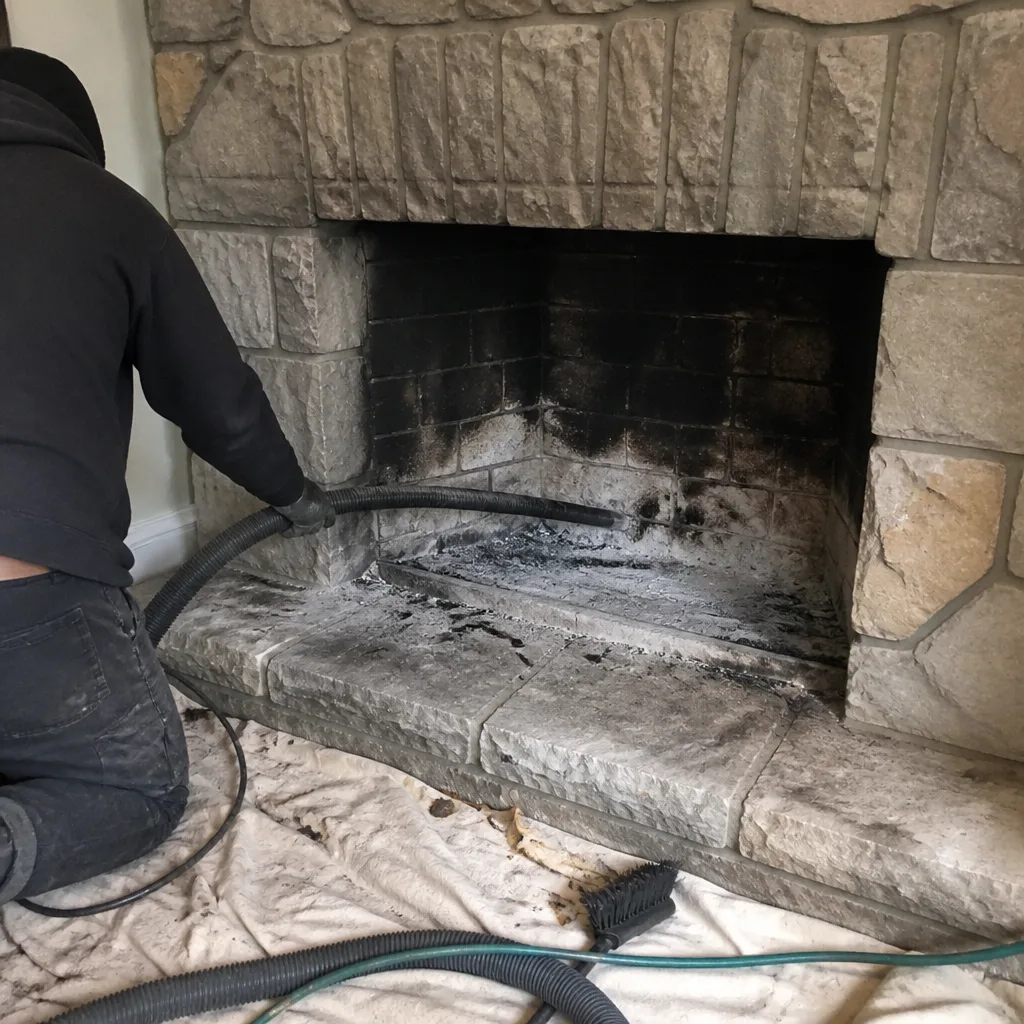 Before
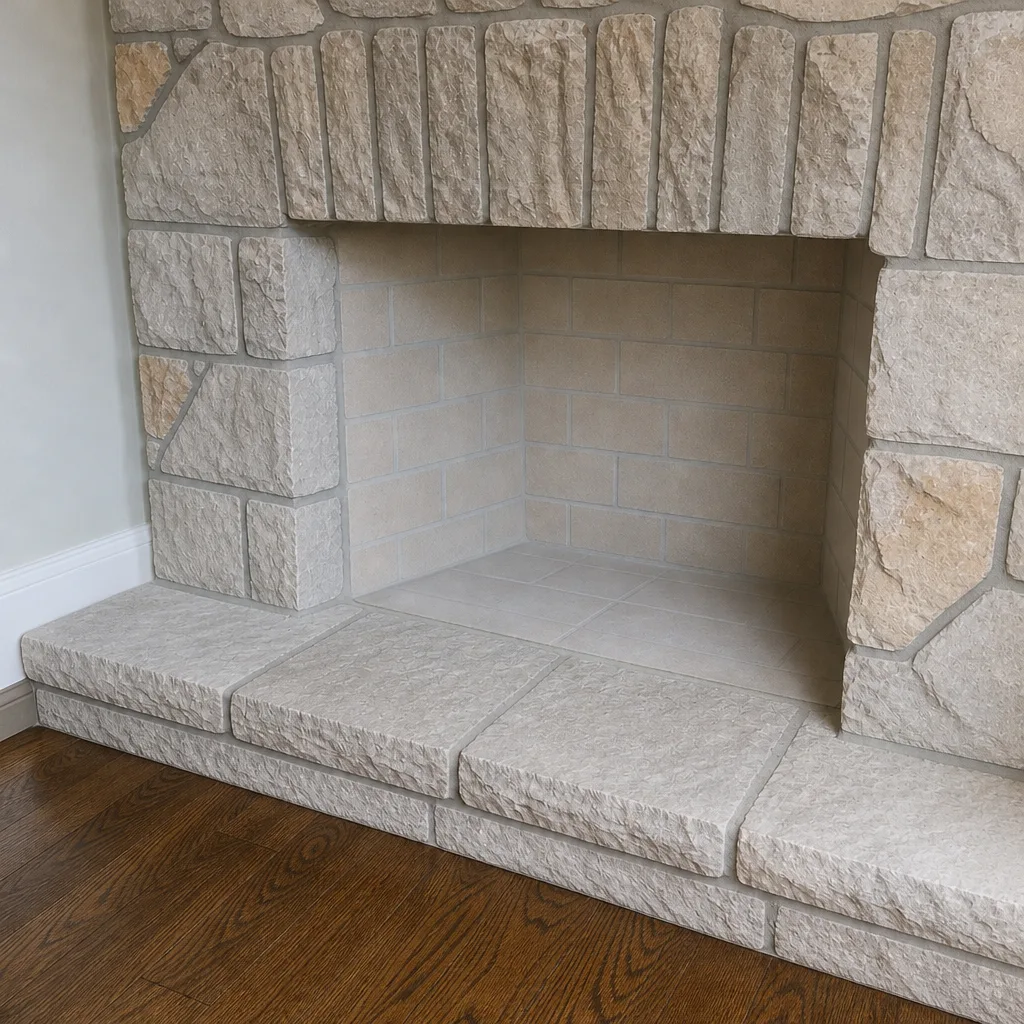 After
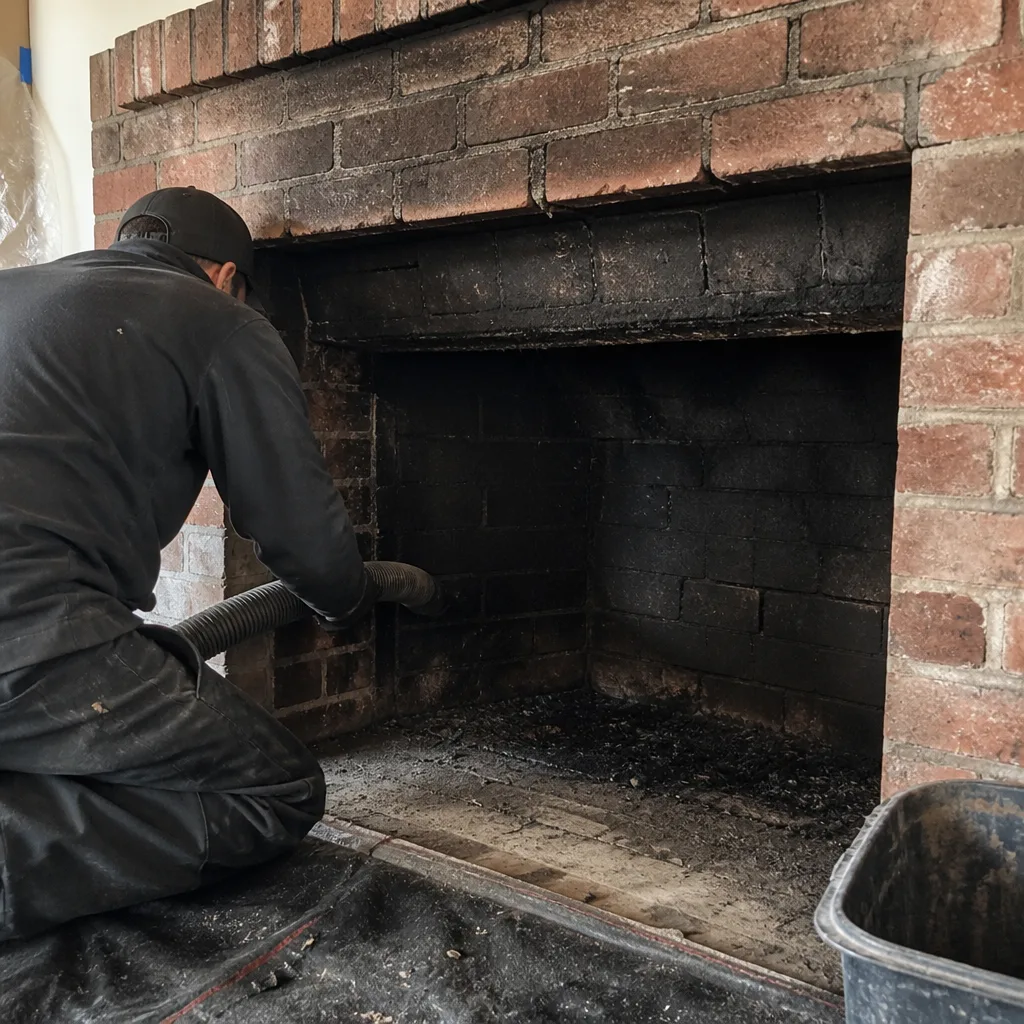 Before
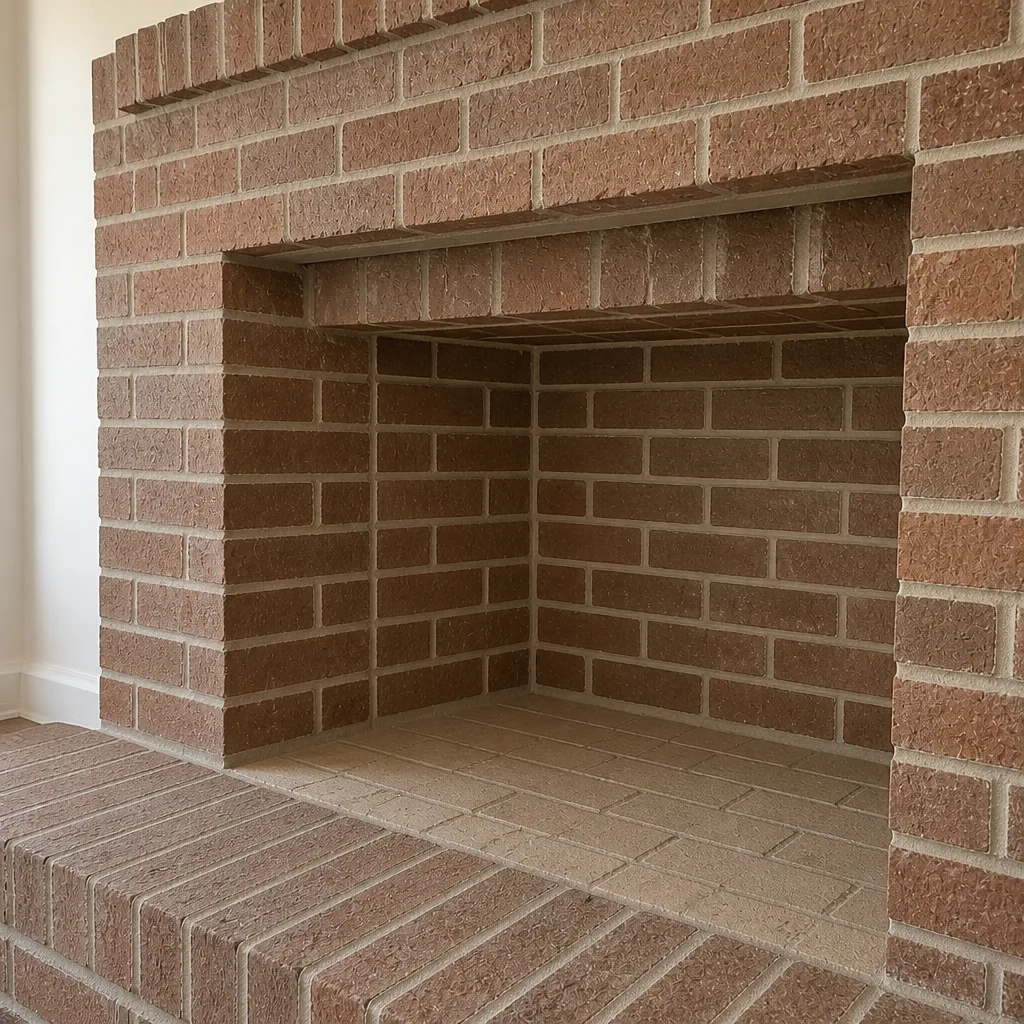 After
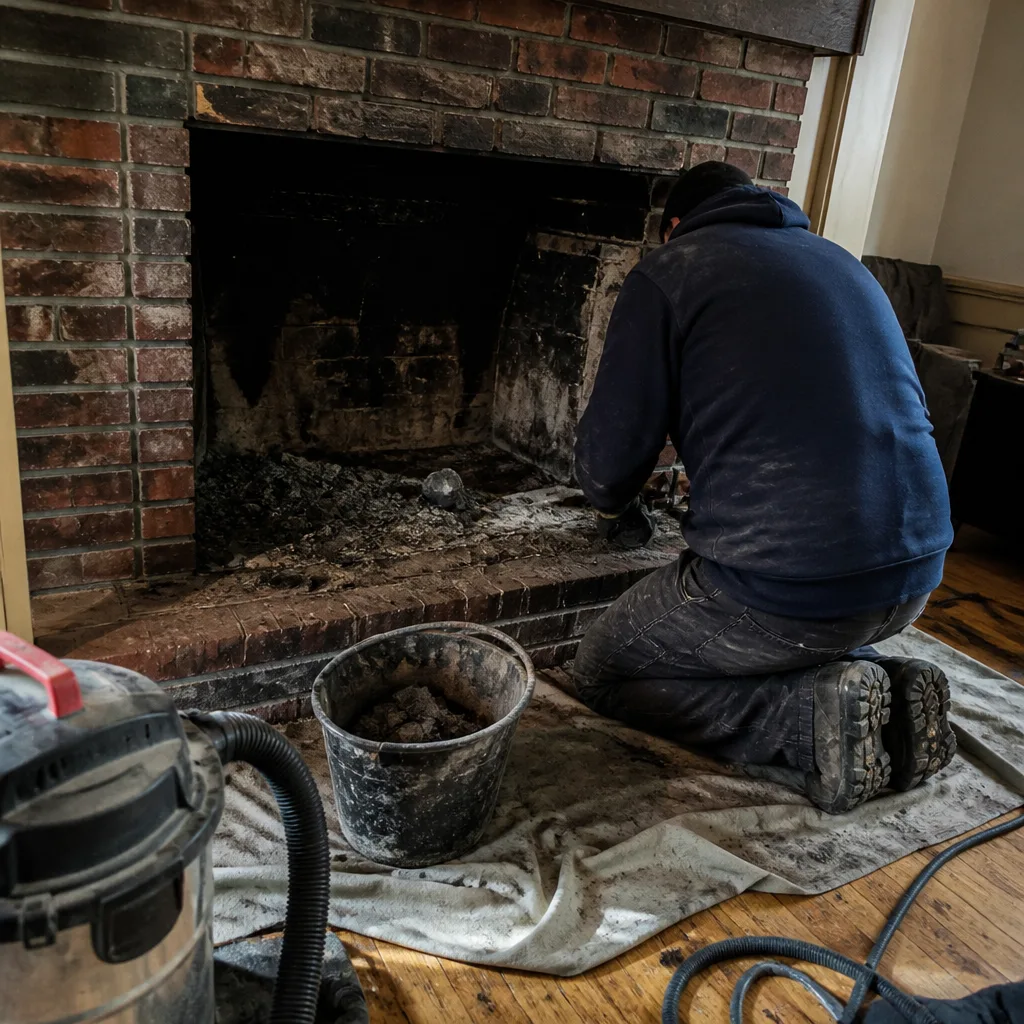 Before
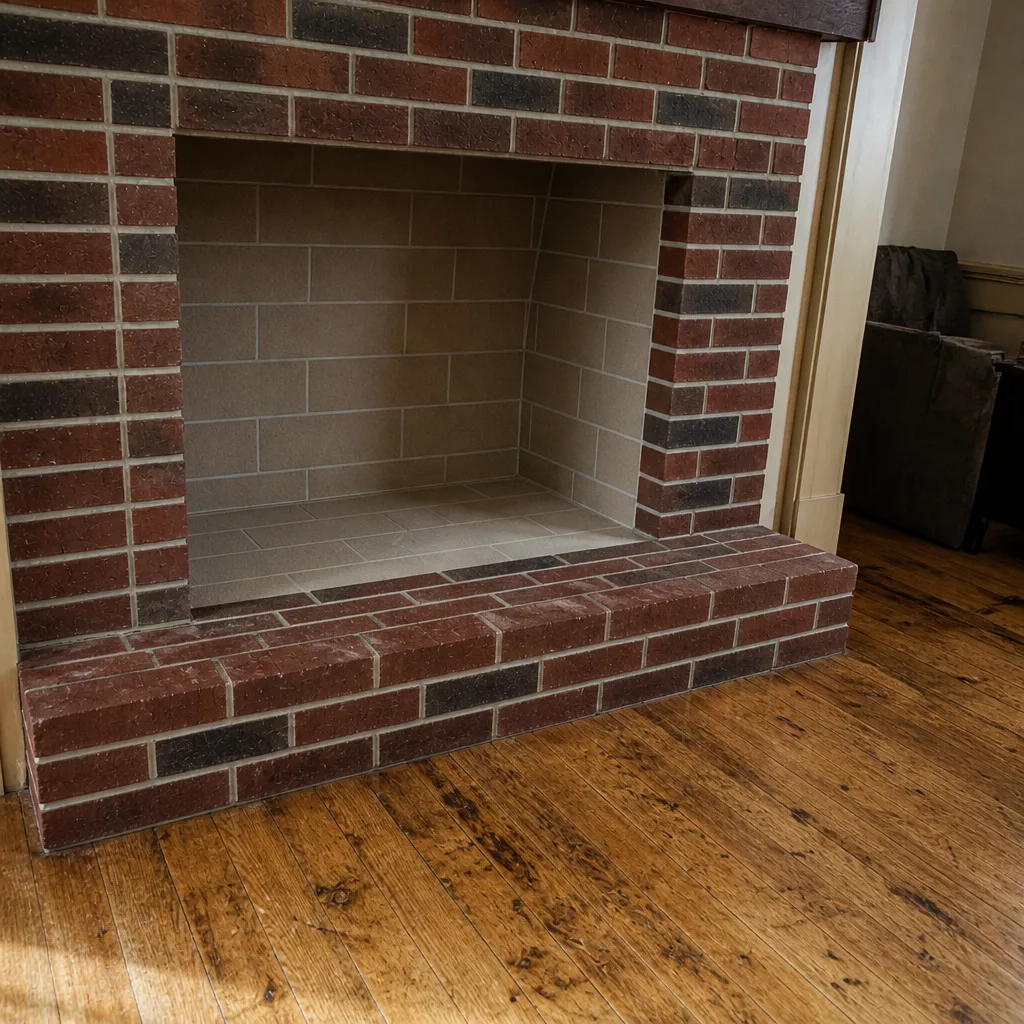 After
When to Call a Professional
Call a professional sweep when you’re starting a new season and haven’t cleaned since last winter, when you see shiny or hardened deposits above the damper, or when the fire isn’t drafting properly. Call if you’re in a home you’ve recently moved into and don’t know the last cleaning date. Call after a storm that may have damaged the cap or crown, and call any time you see water staining near the chimney. As a Renton chimney specialist, we handle sweep, repair, and inspection under one roof, so there’s no juggling a second contractor. Chimney Sweep Renton offers free estimates in Renton. Call (833) 754-5974 to schedule.
Frequently Asked Questions
A standard chimney sweep with a visual inspection in Renton typically runs $200 to $400, depending on your flue configuration and how much buildup is present. The written estimate sets the final price, and that estimate is free. Call (833) 754-5974 for an exact quote. We answer 24/7.
Not always. A liner replacement is only recommended after a proper inspection shows your current flue is cracked, deteriorated, or no longer safe for the appliance. If the flue is sound, a cleaning is all you need. If it isn’t, we’ll show you what we found and explain the options, including HeatShield restoration of a deteriorated flue surface when that’s appropriate. Call (833) 754-5974 for a free estimate.
Most Renton homes should be swept once a year, before the season starts. Households burning over 150 hours a season, or anyone burning mostly Douglas fir, may need twice. A quarter-inch of creosote anywhere in the flue means clean now, regardless of schedule. Call (833) 754-5974 to book a sweep.
Creosote builds up, and with Renton’s damp springs it can glaze into stage-2 deposits over one off-seasons. Glazed creosote is combustible, and it’s the layer that most chimney fires originate in. Skipping one year doesn’t guarantee a fire, but skipping several stacks the odds against you. A sweep plus inspection is the low-cost way to reduce that risk. Call (833) 754-5974 for a free estimate.
A cleaning removes soot and creosote from the flue, firebox, and accessible components. An inspection evaluates the whole system, including the flue interior, crown, cap, flashing, and the connector on a wood stove or insert. In practice, a sweep from a dedicated chimney specialist comes with a visual inspection. Call (833) 754-5974 to schedule one or both.
Sometimes yes: a cap replacement or a minor issue can often be handled on the day of the sweep. Larger repairs, such as a liner restoration, are quoted and scheduled after the inspection so nothing is rushed. We walk through what we found, what’s needed, and what can safely wait. Call (833) 754-5974 for a free estimate.
The Bottom Line
Chimney cleaning in Renton isn’t a single annual errand. It’s a short list of tasks timed around how you burn, what you burn, and what our wet seasons do to the flue between fires. Clean before the season, inspect what you can’t reach, use seasoned wood, and don’t try to handle glazed creosote yourself. A dedicated sweep with a proper inspection is the low-cost way to catch a problem early. Our technicians have up to 15 years of experience and work with trade-grade products by name. Call (833) 754-5974 for a free estimate. We answer 24/7.
Written by the team at Chimney Sweep Renton.